
The hardware has been around for a long time a struggle for Google. Sure, the company has dominated many areas over the years, but it’s hard to shake off the impression that it has always harbored jealousy of what companies like Apple and Samsung have achieved on this front.
After some early struggles (and a major overhaul), Google’s hardware division has begun to gain a foothold. Last year’s Pixel 6/6 Pro release was its biggest hit yet, both in terms of hardware design and sales, outselling the Pixel 4 and 5 combined, according to the company. Likewise, the Pixel 6a is set to redefine the look of a budget Android phone.
Now, it’s important to temper expectations here – sales are still a drop in the bucket, compared to the big players, but at the very least the company finally seems to be on the right track (that’s another question of whether it will reach its destination on time).
Google’s earphone efforts also stumbled. In the age of the AirPods, the first Pixel Buds arrived tethered in 2017, like a throwback from another era. It took another two and a half years, but the second generation buds corrected many of the shortcomings of their predecessors. They weren’t perfect, even perfectly fine.
Picture credits: Brian Heater
Last year’s A-Series, meanwhile, aimed to do what the company has largely succeeded in executing on the smartphone side: stripping the product down to a basic feature set at a very low price. Again, they were fine, although products like the Nothing’s Ear (1) earbuds cut some of their sales with the same $99 price tag and a lot more features.
The new Pixel Buds Pro, meanwhile, take the line in reverse. They’re twice the price of the A-series. That’s a considerable sinkhole, but about in line – and in some cases cheaper – than similarly positioned devices. Keep in mind that the AirPods and Galaxy Buds started to cost around $50 more, though you can easily find them for significantly less than that with a quick Google search.
The biggest points of the $199 Buds Pro over the $99 Series A are:
- Active noise cancellation.
- Improved sound quality thanks to new drivers.
- Enhanced voice calls via an array of three mics.
- Wireless charging.
All the welcome features – and stuff that a $200 pair of headphones really should have in 2022. That doubles for the addition of ANC, which quite frankly should probably be standard in non-professional headphones at this stage. I’ve been using the Pixel Buds Pro as my primary headset for several days now, and can report that they’re doing perfectly fine – pretty much in line with its predecessors. They’re a nice upgrade from the Series A and two-year-old Pixel Buds. As a New York City resident, I can definitely say that active noise cancellation is one of those things you really miss when it’s gone.
I’m a big fan of Sony earbuds in general, and the Link Buds S are the current pick for $200. They’re my daily driver (when I’m not testing other companies’ sets), the benchmark for sound, comfort, and noise cancellation. I would place the Pixel Buds Pro under Sony’s offering in all three categories, while stressing that each of these things can be subjective.
As I’ve noted many times on these pages, the wireless headphones category has gotten pretty good, pretty quickly. As with smartphones, most buds of recognizable names are perfectly fine. Google may have taken longer to get there than most, but I’d put the Buds Pro in that category. Companies tend to fine-tune their hardware products to work well together, and the general rule of thumb is that it makes sense to buy headphones from the same company that made your phone.
Picture credits: Brian Heater
There’s certainly deeper integration with Pixel devices, integrating bud software into smartphone settings. That said, it should work just fine with any device running Android 6.0 or later, starting with the Fast Pair dialog that pops up when you open the case. On a non-Pixel Android device, this interaction occurs with the standalone Pixel Buds app. If you’re an iPhone user, you lose some of those key integrations, but you can still use them like a standard pair of Bluetooth headphones. Overall, I encountered more Bluetooth dropouts on the iPhone than on the Pixel device.
Multipoint is a nice new feature, although it’s disabled by default. Once enabled, you can connect the headset to two devices at once and switch between them. I configured them for the Pixel 6a and my MacBook. It took a bit of tweaking to get the setup right, but I’m glad I did.
Picture credits: Brian Heater
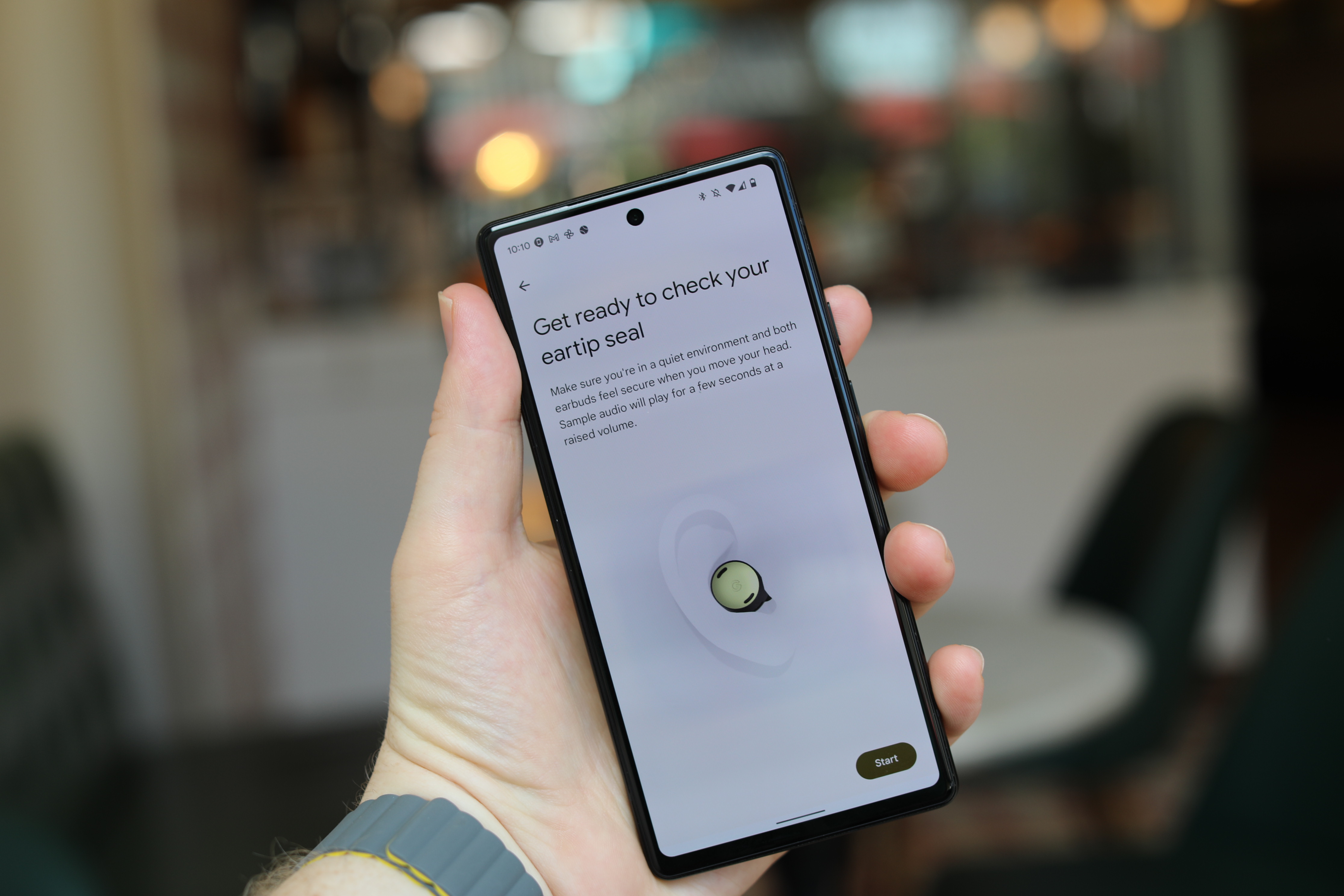
If you have two Android devices signed into the same account, you can enable audio switching to automatically switch between connected devices. After connecting, the app will guide you through a fitting process to ensure you have a good seal, with minimal audio leakage. Mine seemed to fit well out of the box – I suspect it’s not as responsive as, say, Nura’s fitting process.
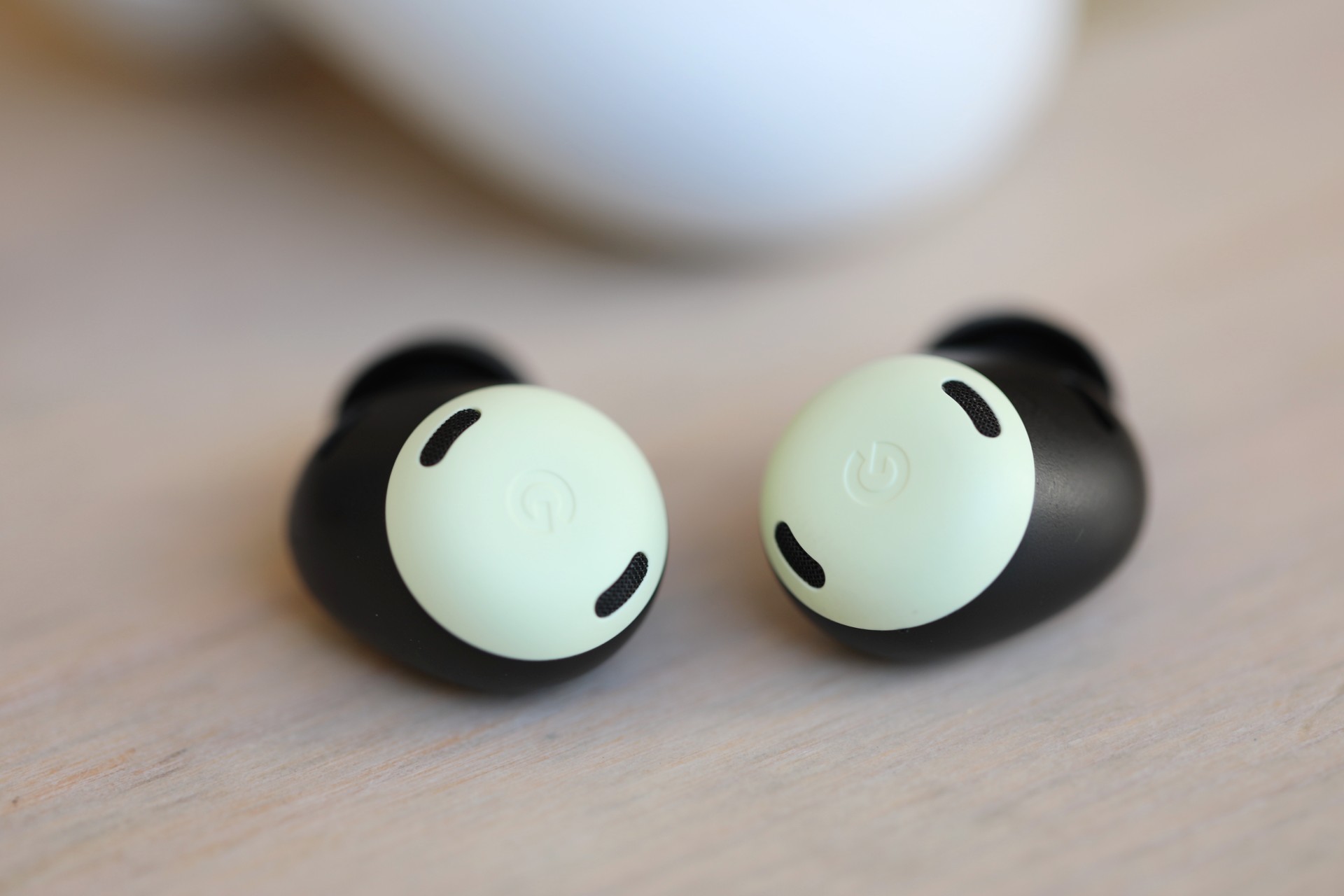
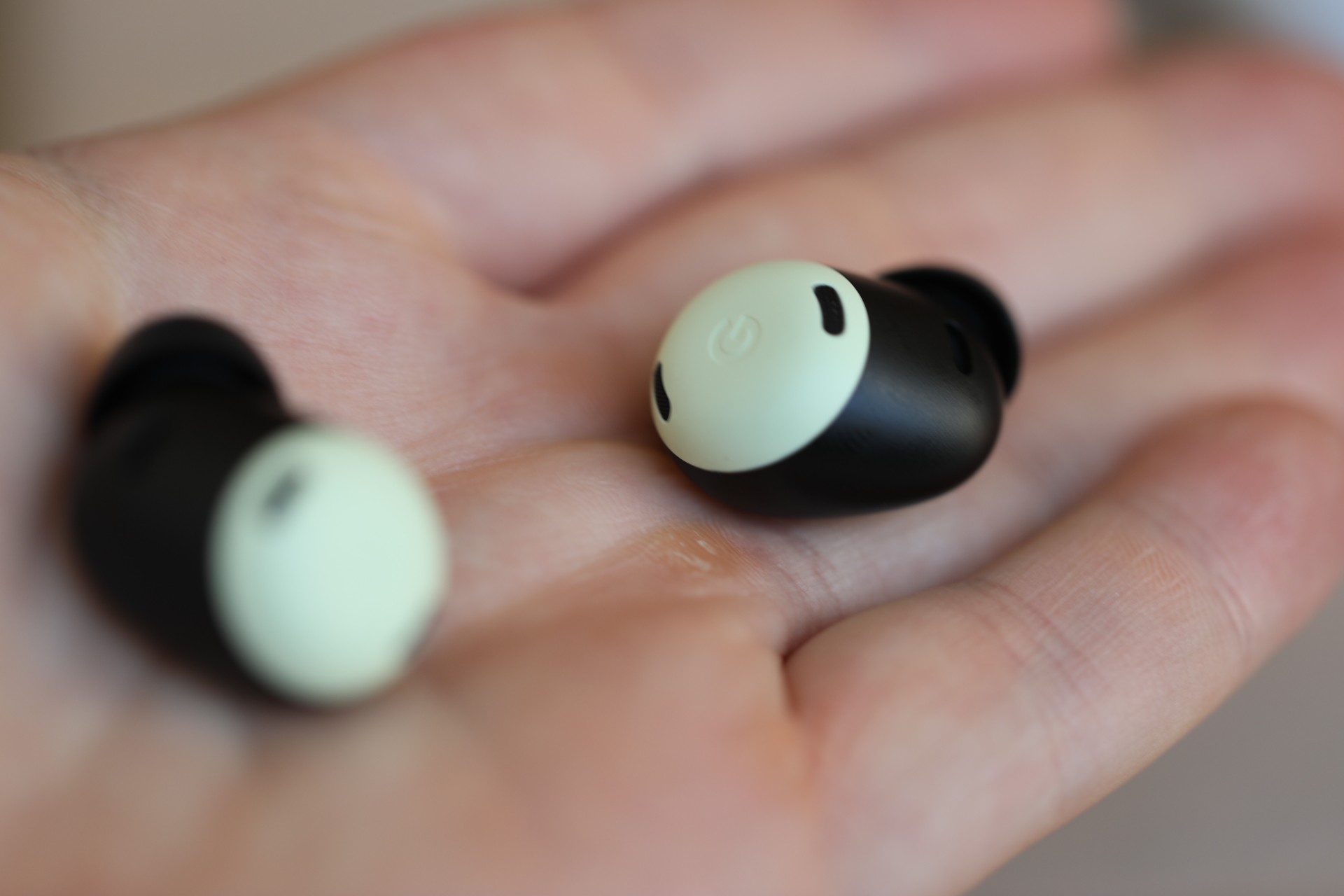
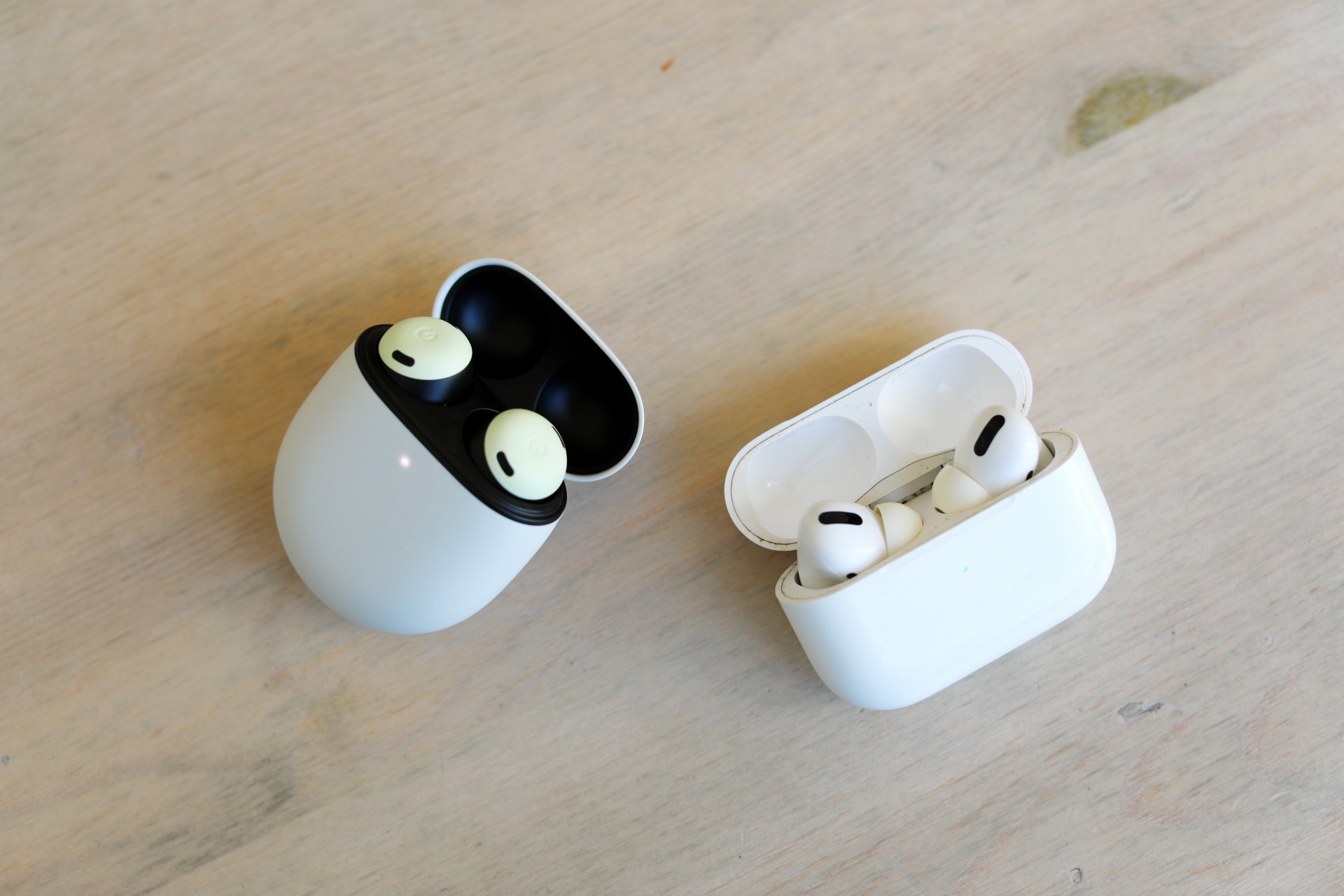
Design-wise, the buds share a lot of common DNA with their predecessors, although they’re noticeably bigger and heavier than the A-series. They’re not going to bust your ears, but Google has added a little in length at conception and over 1 gram at bud weight / ~10 grams with buds and casing combined. I found them reasonably comfortable, albeit less so than Sony’s. The right bud strained my ear a bit after a long listening session.
They stay in place well, although I had to adjust them a bit while running (most non-sports oriented buds do, mind you). I found it very difficult to do this without accidentally triggering the touchpad and accidentally pausing or advancing the track. It is a combination of touch and surface sensitivity. It’s a hard thing to understand and precisely why companies like Apple, OnePlus and Nothing rely on stalk clicks.
Picture credits: Brian Heater
Call quality is crisp and sound is an improvement over previous generations. Anyone looking for good sound quality first and foremost, I’d steer you towards Sony and Nura, but for day-to-day music streaming and listening to podcasts, these do the trick. Likewise, the active noise cancellation works well with ambient sound, but some will invariably slip through here. Google is also following Apple down the road to spatial audio tracking later this year. I’m yet to be convinced it’s more than a novelty, though it’s also finding companies gearing up for an augmented audio future.
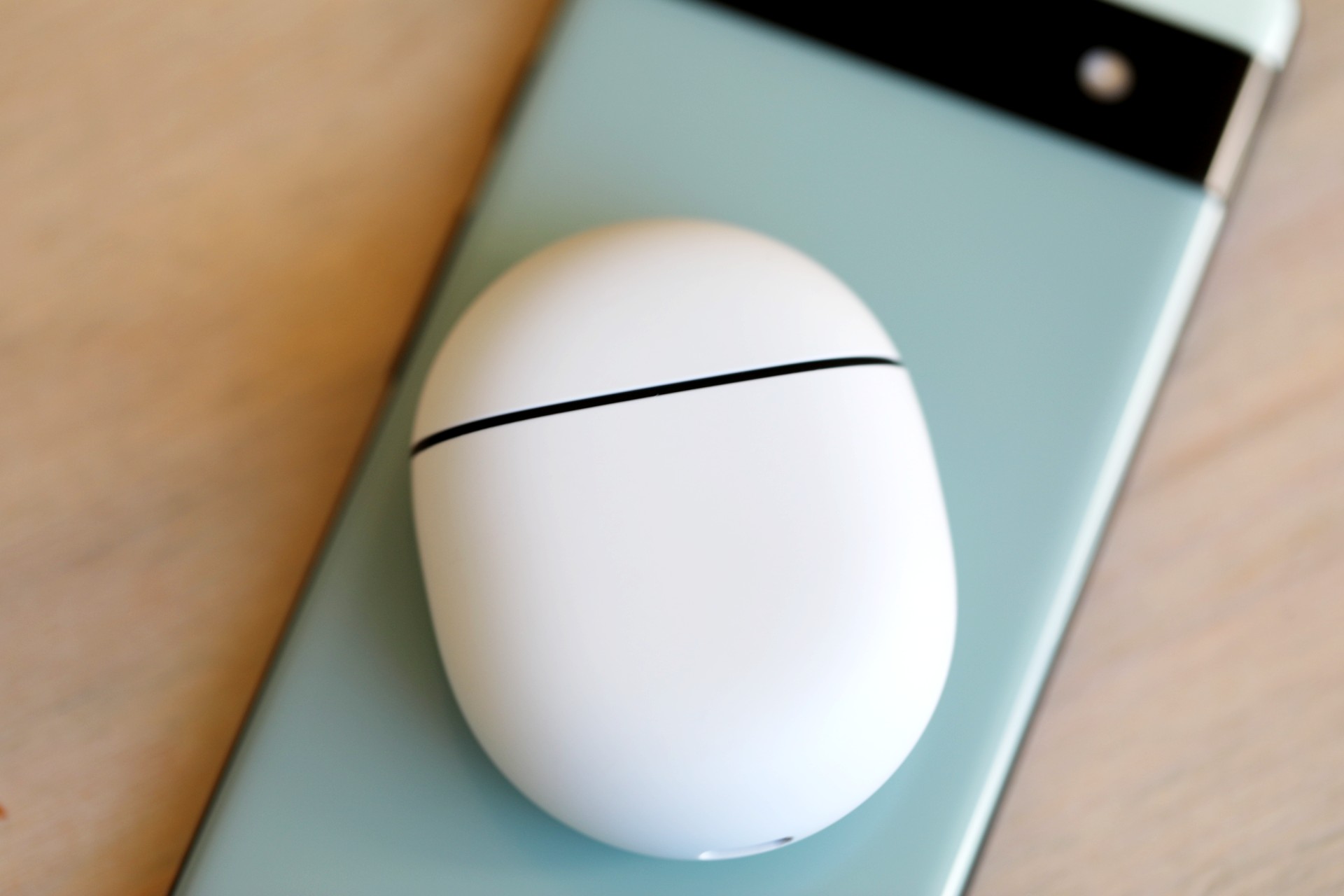
The headphones are IPX4 water resistant, which is more than enough to survive sweat and a freak downpour. The IPX2 case should do well on this front. The case sports wireless charging compatible with the Pixel 6’s Battery Share feature (it’s one of the parts the company dropped to bring down the price of the 6a). The Buds’ battery is rated at 11 hours with ANC off and seven with it on, putting them on the higher end of this spectrum. Consideration of the case brings you up to 8 p.m.
Picture credits: Brian Heater
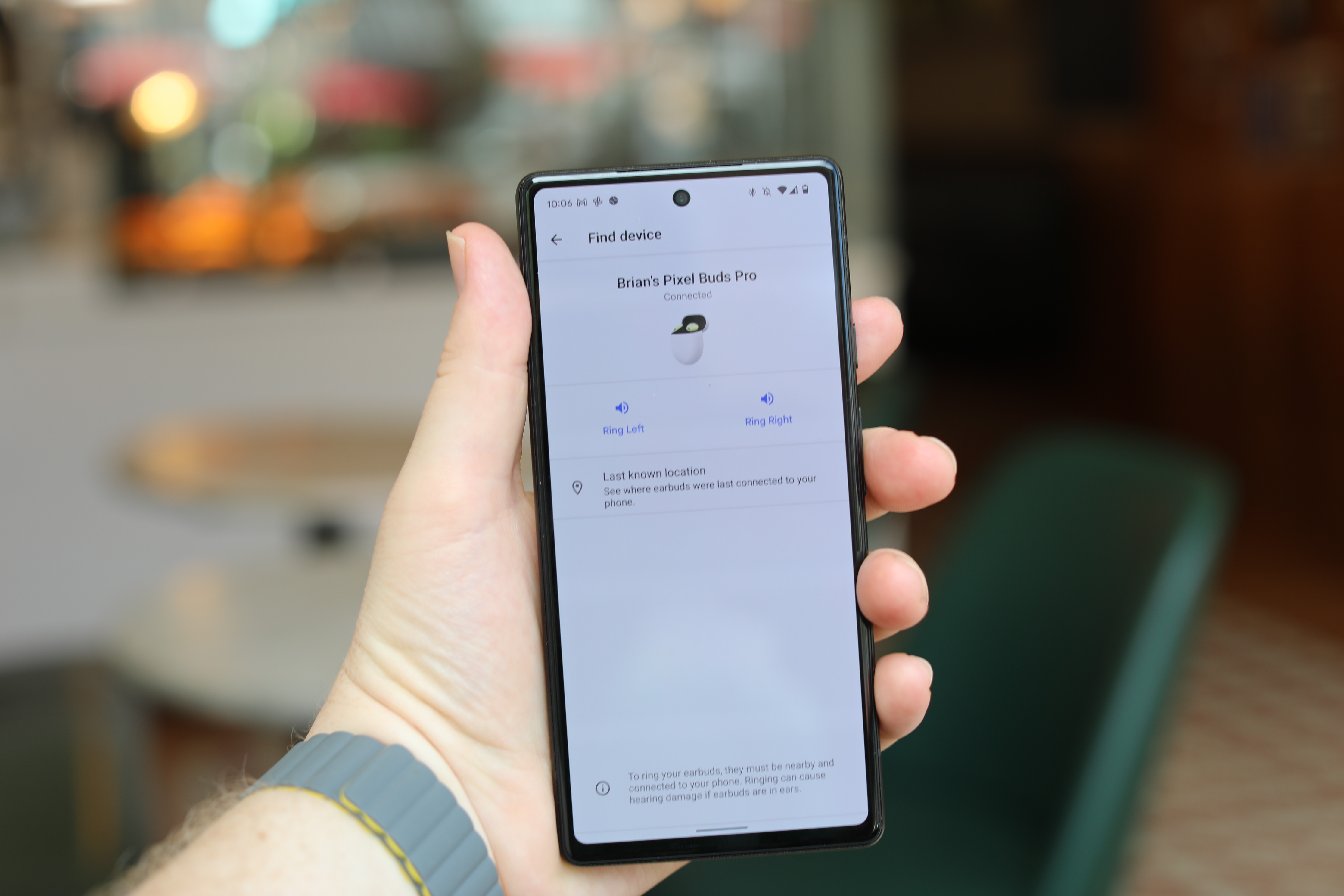
There are some other cool software features built in, like Find My Device, which will place them on a Google map or beep the bud, if you’re sure they’re in the same room. I recently lost a single bud from a competitor without this feature and it really ruined my day.
Picture credits: Brian Heater
Like the latest Pixel Buds, there’s not much to complain about here – and there’s not a ton to recommend the competition either. It’s not hard to imagine the truly impressive pros had they arrived on the scene a few years ago.
As it stands, however, they mostly update the company on competing models that have been out for a while now. If you’re a Pixel phone enthusiast looking for a pair of compatible headphones, check it out. Don’t expect to be seduced.