
The Lightning port is about to turn ten years old, but even so, it’s still finding its way into Apple’s iPhones. This is very strange, especially considering that many other Apple devices are already powered by USB-C. Although we’ve seen a plethora of leaks hinting at the inclusion of USB-C on the iPhone, it has yet to materialize. That said, Apple won’t be able to keep the Lightning port for too long.
A European Union mandate requires manufacturers to install USB-C ports on phones and other devices by 2024. While the directive isn’t specifically aimed at Apple, it will be the most affected. Combine that with numerous reports claiming that Apple is testing USB-C iPhones, it’s only a matter of time before all of this becomes a reality.
Here’s everything we know about USB-C iPhones, and when we expect to finally see them.
USB-C versus Lightning
Before digging into the numbered days of Lightning, it’s important to look at the difference between it and USB-C – and why the latter is objectively the better charging standard.
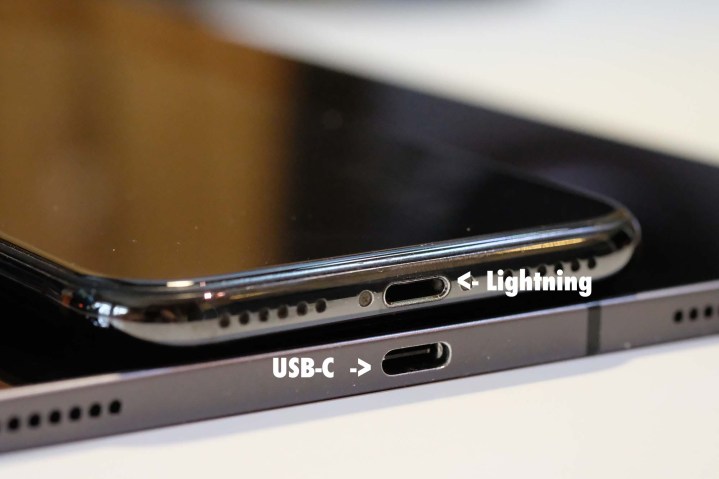
But the superiority of USB-C doesn’t stop there, as it also has a huge advantage in terms of power support. For context, the Lightning port limits charging to 20W, while Android phones with USB-C knock it out of the park with charging speeds of up to 150W. all The phone with USB-C is capable of 150W charging, but the potential is there for ridiculous speeds.
In summary, USB-C is significantly better than Lightning in the areas that matter. It offers wider compatibility, faster transfer speed and power supply for charging.
The mandate of the European Union
On June 7, 2022, European Union lawmakers voted in support for a common charging standard for electronic devices. The policy covers a total of 15 categories which include cell phones, tablets, cameras, portable audio devices, etc. Manufacturers have until the end of 2024 to integrate USB-C into their devices and comply with the new policy. The policy also encompasses laptops, however, in this case, brands have 40 months (early 2026 or so) to make the required changes.
We have an agreement on #CommonCharger! 🇪🇺
More savings for EU consumers & less waste for the planet:
🔌 mobile phones, tablets, cameras… will have #USBtypeC
🔌 harmonized fast charging technology
🔌 unbundling of the sale of chargers
The general European interest prevailed! pic.twitter.com/i2UAE7kzyI
— Thierry Breton (@ThierryBreton) June 7, 2022
The law aims to reduce waste and make people’s lives easier as they could use a single charger for all their devices. According to the EU, the rules will reduce around 11,000 metric tonnes (over 12,000 tonnes) of e-waste per year and save customers €250 million (around $268 million) on ” purchases of unnecessary chargers”.
If Apple wants to continue selling iPhones with a physical charging port, it have be USB-C. The new EU policy ensures that the tech giant cannot get away with simply offering an external dongle like it did years ago.
US senators push for a common charger
Following the European Union agreement, a group of US senators sent a letter to the US Department of Commerce demanding a common shipper law. In the letter, the senators mentioned how proprietary chargers — such as Apple’s Lighting Charger — accumulate unnecessary electronic waste while placing a financial burden on consumers who own devices from different manufacturers.
The letter stated, “The EU has acted wisely in the public interest by taking on powerful tech companies on this consumer and environmental issue,” and “The US should do the same.”
It should be noted that the senators are not asking the Commerce Department to consider USB-C as the universal charging standard. Instead, they are looking for “one overarching strategy” that allows the ministry to create its own standard.
A USB-C iPhone is coming in 2023 or 2024
It’s long been rumored that iPhones are getting USB-C, and while it’s not happening this year, the Lightning port’s days are certainly numbered. Popular Apple analyst Ming-Chi Kuo added weight to the leaks, saying the iPhone 15 series will be the first to switch to USB-C. According to Kuo, USB-C would improve charging speeds and transfer rates on iPhones.
1. iPhone without port may cause more problems due to current limitations of wireless technologies & immature MagSafe ecosystem.
2. Other Lightning port products (e.g. AirPods, Magic Keyboard/Trackpad/Mouse, MagSafe Battery) would also switch to USB-C in the foreseeable future. https://t.co/KD14TgBmtr—郭明錤 (Ming-Chi Kuo) (@mingchikuo) May 15, 2022
If these reports are true, we could see a USB-C iPhone as soon as 2023. It is currently uncertain if the transition will take place on iPhones sold globally or only for European countries. Apple wouldn’t want to give up on Europe denying the policy, as the region is a major market for iPhone sales. Additionally, it seems unlikely that Apple will exclusively produce USB-C iPhones for Europe and Lightning-equipped iPhones for other markets.
The only way for Apple to evade EU policy is to create an iPhone that relies exclusively on wireless charging. Rumors of this have also swirled around, although Kuo believes it won’t happen anytime soon “due to current limitations in wireless technologies and the immature MagSafe ecosystem”.
So where does all of this put us? At the earliest, Apple will have USB-C ready iPhones for 2023. If that doesn’t happen, the company will have to make the switch in 2024. We might not have a USB-C port on the iPhone 14 , but come the iPhone 15 or iPhone 16, it will finally change.
Editors’ Recommendations