
Sleep tracking with Apple Watch is a great way to get new insights into your sleep patterns and trends over time. In fact, with the release of watchOS 7 two years ago, Apple officially added native sleep tracking support to the Apple Watch for the first time. Read on as we round up the best sleep tracking apps for Apple Watch, comparing Apple’s proprietary solution with the competition.
Native Apple Watch sleep tracking
With the release of watchOS 7 in 2020, Apple Watch added official support for sleep tracking without the need for a third-party app.
We went ahead with the experience when it was released, explaining that Apple combines Apple Watch’s sleep-tracking capabilities with new iPhone features like Wind Down and Wake Up for a multi-tasking experience. devices transparent.
There’s a new Sleep app on the Apple Watch, as well as a Sleep mode that hides your usual watch face and instead shows the current time, along with the time your alarm is set. It also disables features like wake-up so your watch face won’t light up in the middle of the night.
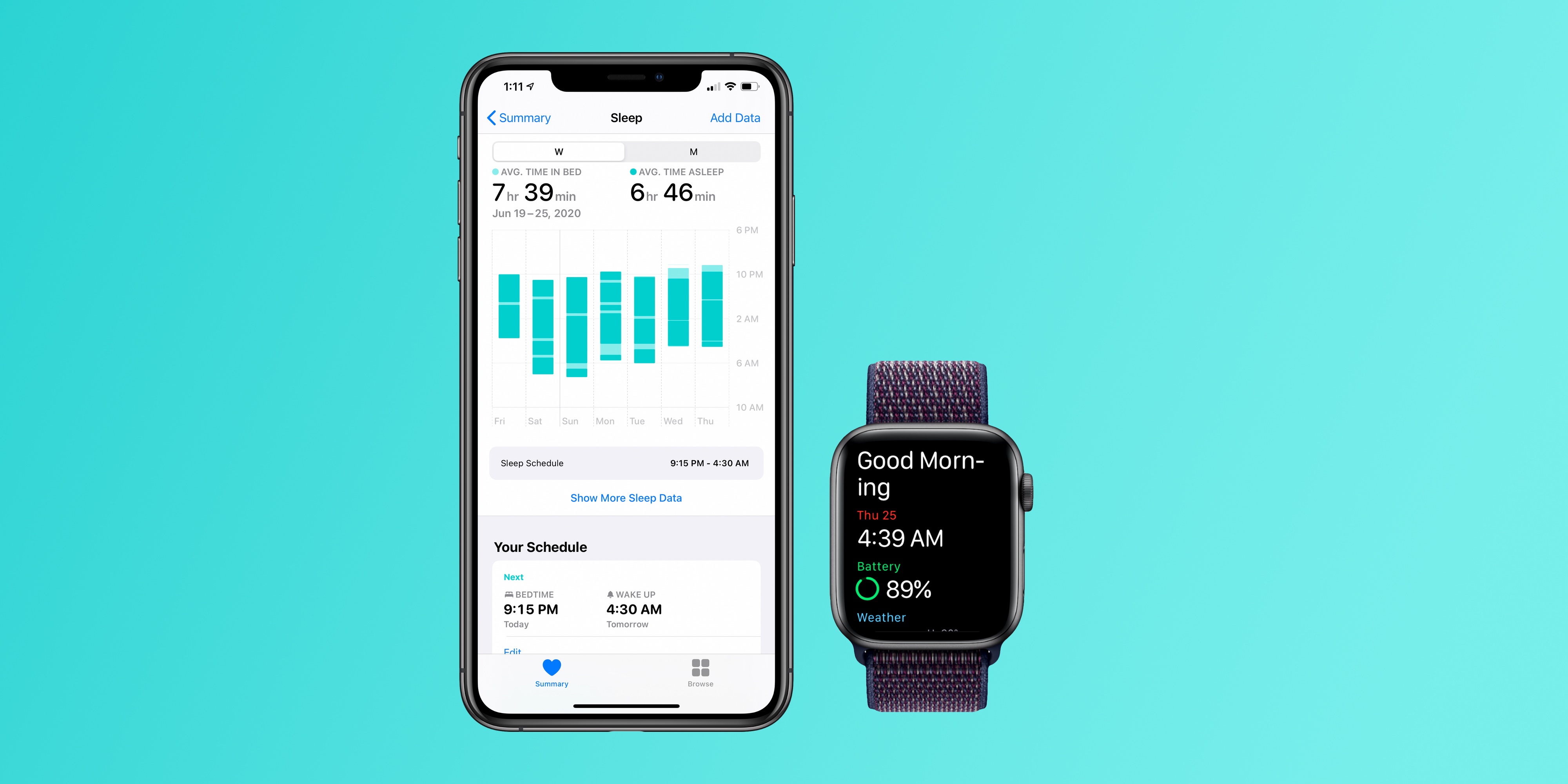
To view sleep data tracked by your Apple Watch, you can go to the Sleep app on Apple Watch or the Health app on iPhone. The actual data here is limited. Apple just shows you your sleep time, along with a range for your heart rate. This is where third-party apps always come in handy. They can offer a lot more data than Apple’s native implementation, and you don’t have to wait until fall to get started.
What about battery life?
Before you start tracking your sleep with Apple Watch, you need to plan when you’ll charge your watch. There are two main options here: before bed or after you wake up in the morning. A key change for me was putting an extra Apple Watch charger on my desk instead of my nightstand.
For me, it’s much easier to recharge before bed every night. I wake up and train first most mornings, so I have to make sure my Apple Watch has enough battery for workout tracking. If I put my Apple Watch on the charger around 8 p.m., after I’ve already hit my stand goal for that day, it’s usually fully charged by the time I go to bed at 9:30 p.m. And when I wake up in the morning, I’m left with almost always over 90% battery – more than enough to get you through the day.
Plus, on days when I need a mid-day charge, having the extra Apple Watch charger on my desk makes that much easier.
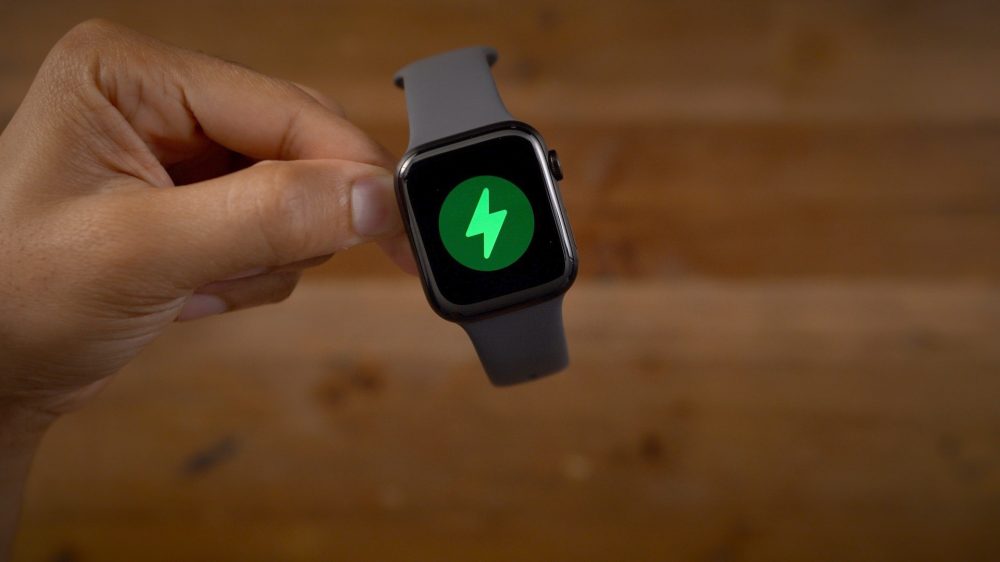
It works perfectly for me, but your routine is probably different from mine. The key is to come up with a plan that you can replicate every day. Whether it’s charging in the morning or evening, or a combination of the two, changing your Apple Watch charging habits is much easier than you might think.
Of course, there’s also always the option of reusing an old Apple Watch as your dedicated “sleep watch”. 9to5Mac’s Zac Hall previously explained how to do this. You can also get a used or refurbished older Apple Watch model to do this.
Once you’ve established a charging routine for your Apple Watch, it’s time to choose a sleep tracking app. There are different options.
Auto Standby
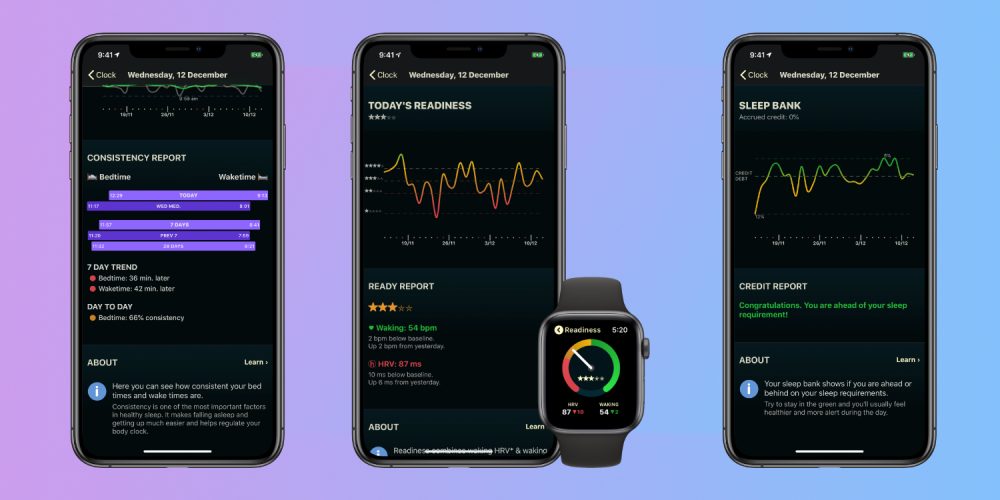
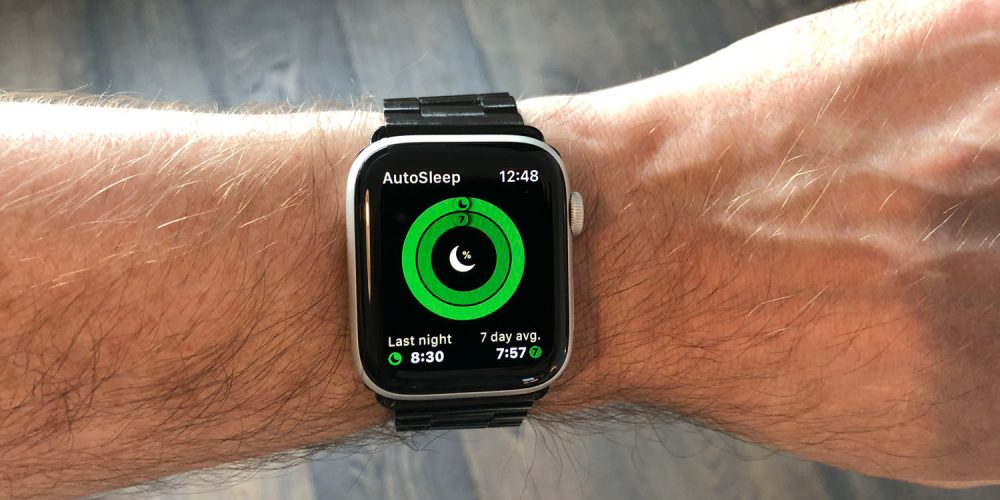
AutoSleep is probably the most popular Apple Watch sleep tracking app on the App Store, and for good reason. It provides some of the most detailed data, including detailed insight into sleep, sleep quality, heart rate, deep sleep and more.
AutoSleep uses a ring system to help you monitor these key stats. The main interface shows you ringtones for sleep, sleep quality, deep sleep and bpm. All of this data comes at a cost, however, and AutoSleep’s interface can feel a bit overwhelming once you dive into all the available data.
To combat this, AutoSleep also offers an excellent Apple Watch app that makes it easy to get a quick overview of the current day’s sleep data. There’s also a “readiness” score that attempts to predict how ready you are for the day based on your sleep for that night.
Learn more about AutoSleep:
AutoSleep is available on the App Store for $3.99 as a one-time purchase.
Sleep++
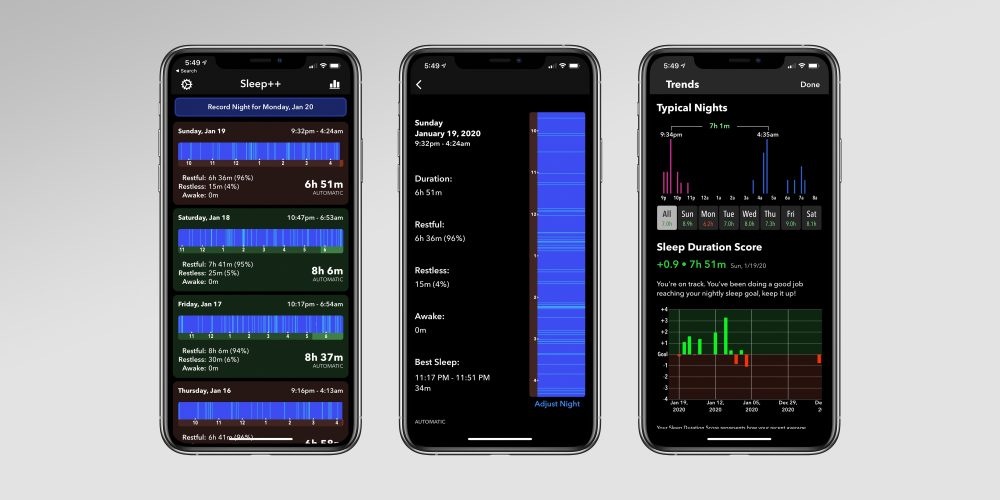
Sleep++ is another popular sleep tracking app for Apple Watch with support for automatic sleep detection, bedtime reminders, sleep goals, and more. In the Sleep++ app, the main interface provides a detailed overview of your sleep habits over the past few days.
Like its competitors, Sleep++ also offers a lot of data on sleep trends, cycles, stages, and more. You can also see a detailed timeline of your sleep, including when you were rested, restless and awake, with a particularly neat look at when your “best sleep” occurred.
One of the best things about Sleep++ is that it’s completely free, with an optional in-app purchase to remove ads. If you are looking for data-rich Apple Watch automatic sleep tracking, you download Sleep++ from the App Store.
Pillow
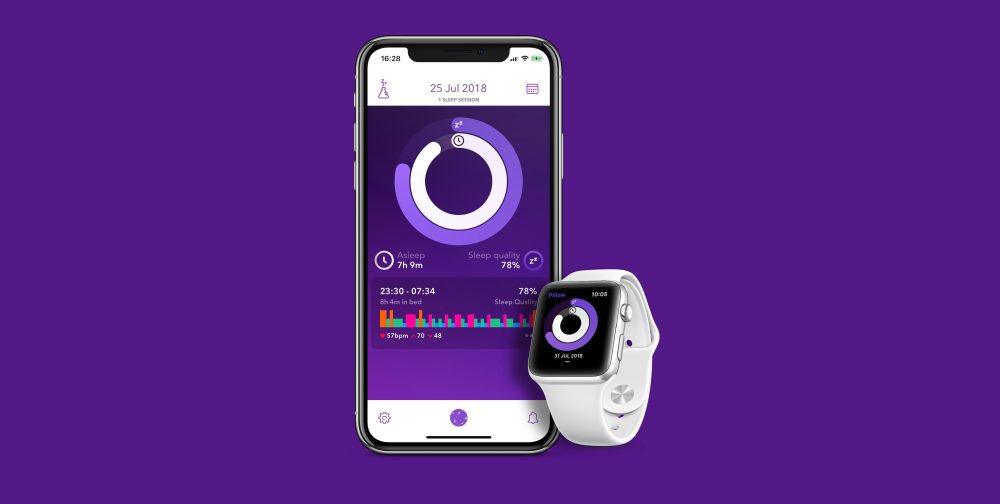
When I wrote about sleep apps for the Apple Watch nearly three years ago, Pillow was an option I didn’t know about at the time, but several 9to5Mac readers suggested I give it a try. With features like automatic sleep detection and heart rate analysis, Pillow fits right in with the rest of the market.
One of the main features of Pillow is its support for recording important audio events throughout the night. This means the app can track data such as snoring, sleep apnea and sleep talk, but the biggest caveat here is that the noise detection only works in manual mode.
There’s also support for viewing detailed sleep trends over time, personalized recommendations, and more. You can try Pillow for free on the App Store with in-app purchases.
NapBot
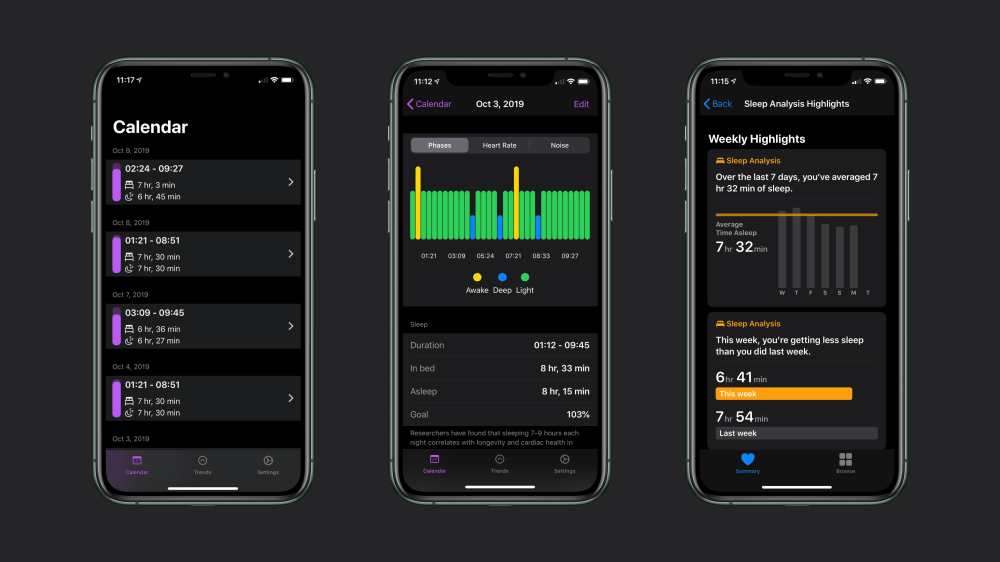
NapBot is a relative newcomer to the Apple Watch sleep tracking fun, and it’s quickly becoming one of the most powerful options out there. NapBot uses machine learning to automatically track sleep, letting you see details about stages, trends, and more.
NapBot offers an impressive amount of data in an incredibly easy to navigate interface. The “Calendar” tab in the app lets you get a detailed overview of your daily sleep, and you can choose a specific day to see more detailed information about heart rate and stages.
NapBot has also just launched its first completely independent Apple Watch application from the iPhone. It currently only lets you see sleep from the previous day, but hopefully it will add more functionality and historical data over time.
NapBot is the newest Apple Watch sleep tracking app, but it’s also quickly becoming my go-to. You can download it for free from the App Store with in-app purchases.
Others
If none of these options pique your interest, Sleep Watch is another choice available on the App Store. Apple acquired Beddit in 2017, but it’s primarily a hardware sleep tracker that you put under your sheets. Sleep Cycle was available for the Apple Watch until recently, but support was dropped in October.
What do I use?
Despite all the new entrants into the Apple Watch sleep tracking industry, I still find AutoSleep to be the most powerful option. AutoSleep offers you a lot of data, and you can choose to read too much of it.
Additionally, I associate AutoSleep data with features introduced with watchOS 7 and iOS 14. You can still use features like Wind Down and Sleep Mode, and track data using third-party sources like AutoSleep.
NapBot is becoming a close second for me, and it’s getting better with each passing update. NapBot and AutoSleep, for example, offer home screen widgets and Apple Watch complications, which isn’t possible with Apple’s health data.
The key, whichever app you choose, is to make sure there is some kind of automatic sleep detection feature. This reduces friction and means you don’t have to remember to manually start a sleep tracking session every night before bed. Instead, your Apple Watch can track your sleep in the background, without any interaction from you.
These apps also integrate with Apple’s Health app, which means you can get an overview of your sleep data along with everything else in the Health app. The Health app is useful for tracking long-term trends and averages, but if you want detailed data, you’ll need to switch to your third-party app of choice.
Of course, there are also rumors that the Apple Watch Series 8 will bring even more advanced sleep tracking capabilities with improved hardware. We’ll have to see what exactly this means and if any third-party apps can use this information.
Do you track your sleep with Apple Watch? Which app do you prefer? Let us know in the comments!
FTC: We use revenue-generating automatic affiliate links. After.
Check out 9to5Mac on YouTube for more Apple news: