
On Sunday evening, more than 60 millimeters (2.3 inches) of rain fell in Karachi, which is equivalent to an entire month of rainfall in just a few hours.
For several months each summer, Pakistan struggles to cope with heavy monsoon rains, but in recent years experts say climate change is accelerating existing weather patterns.
Since the start of the monsoon season last month, more than 300 people have been killed by heavy rains across Pakistan, according to its National Disaster Management Authority.
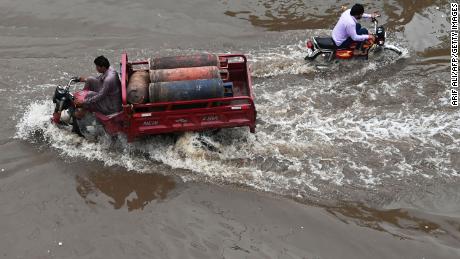
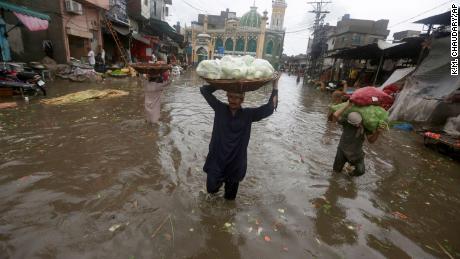
In Karachi, capital of the province of Sindh and which has nearly 16 million inhabitants, entire neighborhoods were partially submerged. Photos show people wading knee-deep in muddy floodwaters, with vehicles stranded by the deluge.
Infrastructure, including bridges, highways and roads, has been damaged, disrupting traffic and disrupting the lives of millions of people across the city. Many have stocked up on fuel for their generators in the event of a power outage.
“Climate change is a threat. We are a coastal city. It is happening so fast and we will bear the brunt of it,” said Afia Salam, a climate change advocate in Karachi. “People need to see the situation beyond individual events like a bridge falling or a road flooding.”
Climate crisis and poor infrastructure
Pakistan often experiences heavy rains from July to September, but experts say the rains have only increased in frequency and intensity.
“The speed of these events is increasing and our response is not keeping pace,” Salam said. “We are reactive to individual events. Strategies have to be put in place.”
“Karachi’s infrastructure is highly vulnerable to climate-related disasters,” according to the World Bank.
The crisis is exacerbated by poor flood management and ineffective disaster response, experts say.
Other provinces, including Baluchistan in the southwest, have also seen extreme rainfall in recent days. At least 87 people have been killed in the province due to “heavy rains, flooding and collapsing infrastructure” this month alone, according to a report by the Provincial Disaster Management Authority (PDMA).
Two people – a woman and a child – died on Sunday after a roof collapsed in Jaffarabad district, according to Naseer Nasar, chief executive of PDMA.
At least eight dams in Balochistan were breached, while nine bridges were damaged, according to the PDMA report. More than 700 head of cattle have died due to the floods, he added.
Karachi’s main streets, home to financial institutions and the headquarters of banks, including the Central Bank of Pakistan, were flooded and rescue services used boats to reach those stranded.
Extreme weather conditions affect millions of people
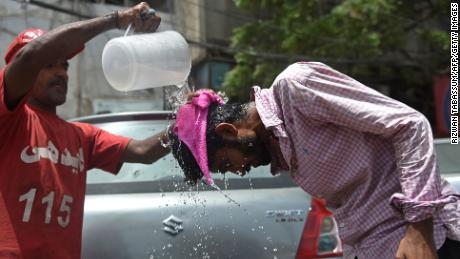
Extreme weather events in South Asia are becoming more frequent due to climate change, with temperatures in parts of India and Pakistan reaching record highs during a heat wave in April and May.
Residents of Pir Koh, a remote mountainous town in Balochistan province, had no access to clean drinking water. The lack of rain caused nearby ponds to dry up, their only source of water being a pipeline that had “rusted and contaminated the water supply”, said local resident Hassan Bugti.
A 2022 report by the Intergovernmental Panel on Climate Change (IPCC) said they had medium confidence that heat waves and moisture stress would become more “intense and frequent and that “annual and summer monsoon rainfall will increase”.
CNN’s Asim Khan contributed reporting.