
After visiting Egypt over the weekend, Lavrov will meet Congolese leaders in person on Monday before traveling to Uganda and Ethiopia. All of these countries are heavily dependent on wheat imports from Russia and Ukraine.
Egypt is the world’s largest wheat importer, and it depends on Ukraine and Russia for supplies to feed a population of 100 million.
Ukraine and Russia agreed on Friday to a deal that would allow the resumption of grain exports from Ukraine’s Black Sea ports, a major diplomatic breakthrough aimed at easing a global food crisis triggered by the war.
On Sunday, the head of Moscow diplomacy met with Egyptian Foreign Minister Sameh Shukri. During this meeting, Lavrov blamed Ukraine for the stagnation of negotiations on “the broader range of issues”.
Global food prices have risen 17% since January, according to the Food and Agriculture Organization of the United Nations (FAO).
Lavrov said in talks with his Egyptian counterpart that the agreement to free Ukrainian ports will continue.
“It will be guaranteed that the Ukrainians will clear their territorial waters and allow ships to depart from there, and when passing through the high seas, Russia and Turkey will ensure their safety with their military naval forces,” Lavrov said.
“The Arsenal of Terror”
“This is a cold, ruthless and calculated siege by Putin against some of the world’s most vulnerable countries and people…and we cannot tolerate it,” von der Leyen told EU lawmakers.
Lavrov, however, was keen to deflect responsibility for the shortages from Moscow, instead blaming the West in a letter written Friday for newspapers in African countries and published by the Russian Foreign Ministry ahead of his departure.
“Western and Ukrainian propaganda that accuses Russia of allegedly ‘exporting hunger’ is totally unfounded,” Lavrov wrote, calling them an attempt to shift blame.
Instead, he claimed that the “collective West” had monopolized commodity and supply flows during the Covid-19 pandemic, worsening the food import situation in developing countries, which has been further exacerbated by the sanctions imposed on Russia.
Most African countries did not condemn the Russian invasion of Ukraine, as they sought to maintain balance in their relations with Moscow and Western countries.
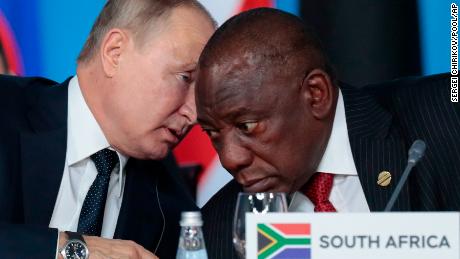
This is a position that Russia is keen to protect and Lavrov is using the trip to highlight Moscow’s “long-standing” relationship with the African continent and also stresses that Russia is not “tainted by bloody crimes of colonialism”.
In the letter, he praised the “balanced stance” taken by African nations on what he called “events in and around Ukraine”, praising his “friends” for not adhering to anti-Russian sanctions despite ” external pressures on an unprecedented scale”.
“Russia will continue to fulfill in good faith its obligations in accordance with international contracts in terms of exports of food, fertilizers, energy and other vital goods for Africa. Russia is taking all measures to achieve,” he wrote in the article titled “Russia and Africa: A Partnership with a Vision for the Future.”
The letter was written on Friday for Egyptian newspaper Al-Ahram, Congolese newspaper Les Dépêches de Brazzaville, Ugandan newspaper New Vision and Ethiopian newspaper Ethiopia Herald.